If you manage pavement, asphalt, or infrastructure projects, you already know one thing: pavement management is no longer just about roads—it’s about data, coordination, and control.
Many pavement companies start with spreadsheets, disconnected tools, or generic construction software. At first, it worked. But as projects grow, teams expand, and costs rise, cracks begin to show, missed timelines, inaccurate job costing, payroll issues, and limited visibility into performance.
That’s where a Pavement Management System (PMS) comes in.
A modern pavement management system brings structure to complexity. It connects field operations with office management and turns day-to-day activity into actionable insight. But not all systems are created equal.
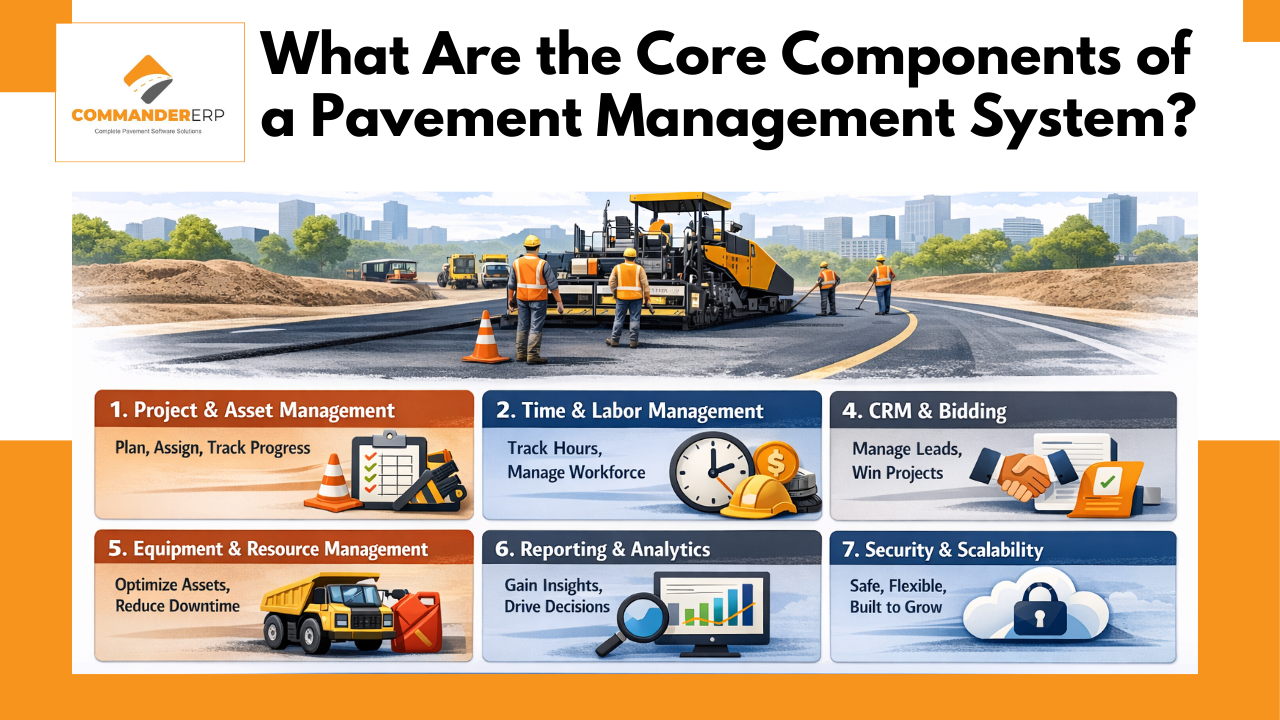
Let’s break down the core components of a pavement management system and why each one matters.
1. Project and Asset Management: The Foundation of Pavement Operations
At the heart of any pavement management system is the ability to manage projects clearly and consistently. Pavement projects involve multiple crews, schedules, tasks, and timelines. Without a centralized system, project data quickly becomes fragmented.
A strong PMS allows teams to plan projects, assign tasks, monitor progress, and track completion, all in one place. When everyone works from the same project data, accountability improves and delays become easier to prevent.
In modern cloud-based systems like Commander ERP, project management isn’t isolated. It connects directly to labor, costs, reporting, and performance, giving managers real-time visibility into how each project is actually performing—not just how it was planned.
2. Time Tracking and Labor Management: Where Costs Are Won or Lost
Labor is one of the largest expenses in pavement operations. Yet it’s often one of the least accurately tracked.
A core component of a pavement management system is built-in time tracking that connects employee hours directly to jobs and tasks. This eliminates guesswork, reduces payroll errors, and ensures labor costs are accurately reflected in job costing.
Instead of chasing paper timecards or correcting payroll mistakes after the fact, modern PMS platforms allow time to be captured in real time and reviewed instantly. This creates transparency for both employees and management.
With Commander ERP, time tracking flows seamlessly into payroll and reporting, helping pavement companies understand exactly where labor dollars are going—and how to improve efficiency.
3. Financial Management and Job Costing: Understanding True Profitability
Winning projects is important. Winning profitable projects is what sustains a pavement business.
A pavement management system must provide clear financial visibility. This includes tracking expenses, payroll, revenue, and overall company performance. Without accurate job costing, companies often don’t realize a project was unprofitable until it’s already completed.
Modern PMS software connects financial data directly to projects, labor, equipment, and services. This allows managers to see real-time job performance instead of relying on delayed reports.
Commander ERP’s financial and performance tools help pavement companies move from reactive decision-making to proactive control, so profitability isn’t a surprise, but a strategy.
4. CRM, Bids, and Opportunity Management: From Lead to Completed Project
Pavement management doesn’t start when a project begins. It starts when an opportunity is identified.
A core PMS component includes customer relationship management (CRM) and bid tracking. This ensures leads, bids, and opportunities are not scattered across emails or spreadsheets.
When CRM and bidding tools are integrated into the same system as project management, pavement companies can track which bids convert, which clients are most profitable, and how sales activity impacts operations.
Commander ERP allows pavement teams to move seamlessly from opportunity to bid to project, without losing data along the way.
5. Operations, Equipment, and Resource Management: Keeping the Field Moving
Pavement operations rely heavily on equipment, fuel, materials, and vendors. When these aren’t tracked properly, costs rise silently.
A complete pavement management system includes tools to manage equipment usage, fuel consumption, maintenance, suppliers, and services. This visibility helps reduce downtime, extend asset life, and prevent unnecessary spending.
By centralizing operational data, companies can identify inefficiencies before they become expensive problems. Commander ERP brings these operational components into one system, ensuring field activity is always aligned with financial and project goals.
6. Reporting and Analytics: Turning Activity into Insight
Data alone isn’t valuable unless it leads to better decisions.
One of the most important components of a modern pavement management system is reporting and analytics. Dashboards and reports allow managers and executives to understand performance at a glance, without digging through spreadsheets.
From project profitability to labor efficiency and company-wide performance, reporting tools help pavement businesses identify trends, reduce risk, and plan for the future.
Commander ERP transforms everyday operational data into real-time insights that support smarter, faster decisions.
Read More: Why Chip Seal Is a Smart Choice for Long-Lasting Pavement
7. Configuration, Security, and Scalability: Built for Growth
As pavement companies grow, their systems must grow with them.
A PMS should be configurable, secure, and scalable. Role-based access ensures employees see what they need, nothing more. Cloud-based infrastructure ensures data is accessible anytime, anywhere, without heavy IT overhead.
Commander ERP is designed to scale alongside pavement businesses, supporting growth without adding administrative complexity.
Why Cloud-Based Pavement Management Systems Are the New Standard
The shift to cloud-based PMS platforms isn’t a trend, it’s a necessity.
Cloud systems allow real-time collaboration between field and office teams, instant data updates, and improved reliability. They eliminate version conflicts, manual data entry, and disconnected workflows.
For pavement companies managing multiple crews and projects, cloud-based ERP software like Commander ERP provides the flexibility and visibility modern operations demand.
What Happens if I Bringing All the Components Together
The biggest challenge in pavement management isn’t lack of effort, and its ability to it’s lack of integration.
When project management, time tracking, financials, CRM, operations, and reporting live in separate systems, inefficiencies multiply. A true pavement management system brings every core component together into a single platform.
Commander ERP was built specifically for pavement and infrastructure professionals who need clarity, control, and confidence in their operations.
